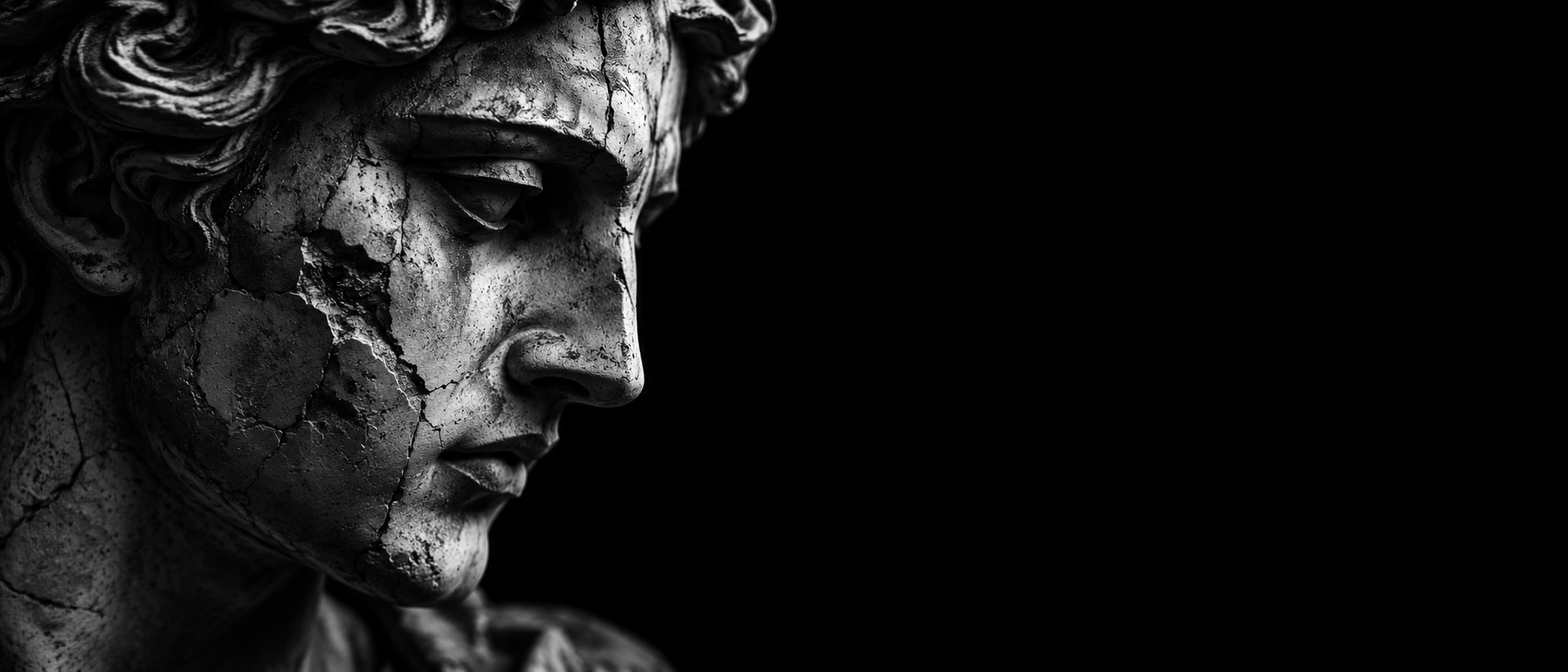
We are afraid of being imperfect, so we try hard to become perfect. But perfection is immeasurable. There is no universal scale that tells us when we have finally achieved it. The more we chase it, the further the finish line seems to move.
Eventually, what begins as an attempt to improve ourselves can turn into pressure.
But why are we so afraid of being imperfect? And what happens when our pursuit of perfection starts affecting the way we see ourselves?
Why Is Perfection Pressure?
Perfection is not necessarily pressure. The pressure begins when we become consumed by it.
I came across an article that helped me understand perfectionism and its drawbacks. The research discussed how perfectionism has increased among younger generations over the years, particularly the feeling that other people expect us to be perfect.
Thomas Curran and Andrew Hill studied perfectionism among college students in the United States, the United Kingdom, and Canada. Between 1989 and 2016, socially prescribed perfectionism increased by 33%.
Thomas Curran, one of the researchers, also discussed these findings in an interview with the American Psychological Association.
If you have time, take a look at the article linked below. It offers more interesting insights into why perfectionism is becoming a concern.
Reference: Why Do We Push Ourselves to Be Perfect? — American Psychological Association
So, why do we try so hard to be perfect?
Two forms of perfectionism can help us understand this: self-oriented perfectionism and socially prescribed perfectionism.
Self-Oriented Perfectionism and Socially Prescribed Perfectionism
Self-oriented perfectionism
This is when we set excessively high standards for ourselves and constantly evaluate ourselves against them.
Think about the short videos we watch on the internet. We see people with impressive bodies, successful careers, beautiful homes, and seemingly perfect lifestyles. Sometimes, these images inspire us to improve ourselves. But sometimes, we start comparing our everyday lives with someone else's carefully presented moments.
We begin setting standards for ourselves based on what we see.
At first, it seems like a good thing. We want to become better versions of ourselves. But what happens when we become so attached to our standards that we no longer allow ourselves to make mistakes, experiment, or learn?
We start creating a version of ourselves that we feel obligated to maintain.
Every mistake feels like a setback. Every failure feels like evidence that we are not good enough. Instead of learning through the process, we become afraid of losing the image we have built.
This is where the fear of failure begins to interfere with growth.

Socially Prescribed Perfectionism
Now, imagine that the pressure does not come only from you. It comes from the people around you.
Your parents expect something from you. Society has its own standards. Your workplace expects you to perform. Social media constantly shows you what other people appear to have achieved.
You begin asking yourself questions.
What will my parents think? What will society say? Will people respect me if I fail? Am I meeting the expectations others have of me?
Sometimes, nobody explicitly tells us that we must be perfect. Yet we begin to believe that we need to meet these expectations to receive approval, acceptance, or respect.
This is socially prescribed perfectionism: the feeling that other people expect us to be perfect.
The pressure can become particularly difficult when we cannot distinguish between what we genuinely want and what we believe others want from us.
Both forms of perfectionism can become problematic when our standards turn rigid and mistakes feel unacceptable. Research has linked certain perfectionistic concerns with anxiety and other mental health difficulties, although the relationships are complex and not every form of perfectionism has the same effects.
And when we cannot meet the standards we have created for ourselves or believe others have created for us, we can find ourselves caught in a trap.
The Perfection Trap
We want to improve, so we set a standard.
Once we reach that standard, we notice something else that needs improvement. We set another standard, work harder, and move forward. But before we can appreciate what we have achieved, we are already thinking about the next thing that needs fixing.
The finish line keeps moving.
The problem is not that we want to improve ourselves. The problem begins when improvement becomes an endless obligation, and we can no longer appreciate where we are because we are too focused on where we think we should be.
We keep correcting, comparing, and evaluating ourselves. Even our achievements can feel incomplete.
At some point, we need to ask ourselves: are we improving because we want to grow, or are we trying to escape the feeling of being imperfect?
And if perfection is something we can never measure completely, how do we know when we have done enough?
Does Imperfection Have Its Own Beauty?
You might ask: if the pursuit of perfection can create so much pressure, should we stop trying to be perfect altogether?
I am not saying that we should intentionally become imperfect or stop improving ourselves. At the same time, we do not need to be constantly conscious of every flaw.
Maybe we need to look at imperfection a little differently.
Let's take a few examples.
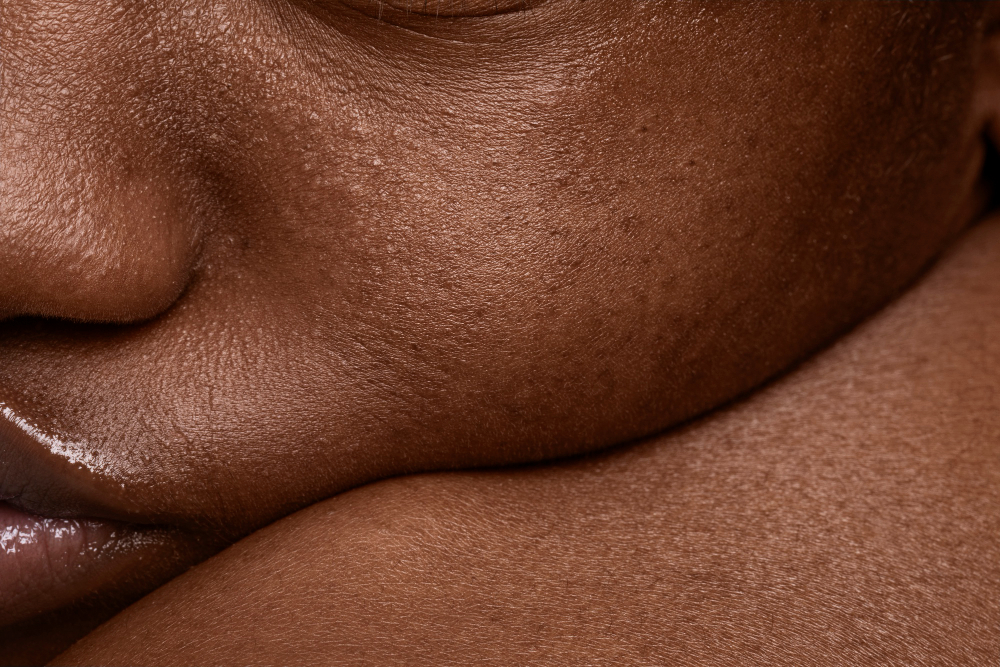
Human Skin
Think about the people we see in advertisements. Their skin often appears brighter, smoother, and more uniform than our own. We look at these images and sometimes begin comparing our appearance with theirs.
But what happens when we look closely at human skin?
We find pores, fine lines, scars, pigmentation, hair, and countless variations in texture. These are normal features of human skin, yet the images we see in advertising can make us believe that smoothness without visible variation is the ideal.
From a distance, the overall image looks flawless. Up close, we discover details that were never visible in the first place.
Does discovering those details make the person less beautiful?
Not necessarily. Beauty does not depend on the absence of every mark, variation, or difference.
Perhaps the problem is not the skin itself, but the standard against which we have learned to judge it.
Digital Pixels That Make Giant Billboards
We see giant billboards every day. They display beautiful photographs, advertisements, and designs that look seamless from the road.
But have you ever looked at one from very close?
A digital image is made up of tiny picture elements called pixels. In many displays, colours are produced using red, green, and blue light, commonly known as RGB. Together, these tiny elements create the larger image we see.

When we look at the individual components, the image is no longer the seamless picture we saw from a distance. We can see its structure.
Yet when we step back, those same components come together to form a recognizable and visually compelling image.
The pixels have not changed. Our distance from them has changed.
The whole image can appear beautiful even though its individual components do not resemble the finished picture.
The Three-Column Grid System
As a designer, I come across this interesting concept while building websites.
We divide a digital screen into columns to maintain a consistent layout across different screen sizes, whether it's a mobile phone, tablet, or desktop.
When we need two columns, we divide the available space equally.
2 columns: 50% × 2 = 100%
Simple, right?
When we need four columns, we do the same.
4 columns: 25% × 4 = 100%
Everything fits perfectly.
But what happens when we need three columns?
3 columns: 33.3% × 3 = 99.9%
Wait. Where did the remaining 0.1% go?
We use 33.3% for each column, but the total adds up to only 99.9%. We sacrifice a tiny fraction of mathematical precision to create a layout that looks perfectly balanced to our eyes.
Of course, modern CSS Grid can divide space into three equal columns without this rounding issue. But the example makes me think about something beyond web design.
We sacrifice 0.1% of imperfection to create 99.9% of perfection, which looks perfect, but technically, it's not.
And perhaps that is the interesting part. What appears perfect at one level of observation can reveal something different when we look closer.
Combining these three examples gives me a thought:
Distance creates perfection; closeness reveals imperfection.
From a distance, we see the whole. As we move closer, we begin noticing the details, variations, and structures that were hidden from us.
But does noticing those details mean the whole is any less beautiful?
Wabi-Sabi
There is a Japanese aesthetic tradition known as wabi-sabi, which offers another way to think about beauty.
Rather than treating flawless appearance as the only ideal, wabi-sabi appreciates qualities such as simplicity, natural irregularity, aging, and the marks left by time.
Think about an old ceramic bowl.
It may have an uneven shape, a rough texture, or a surface that has changed over the years. It may not look as uniform as a newly manufactured bowl. Yet those characteristics can give it a distinct presence and appeal.
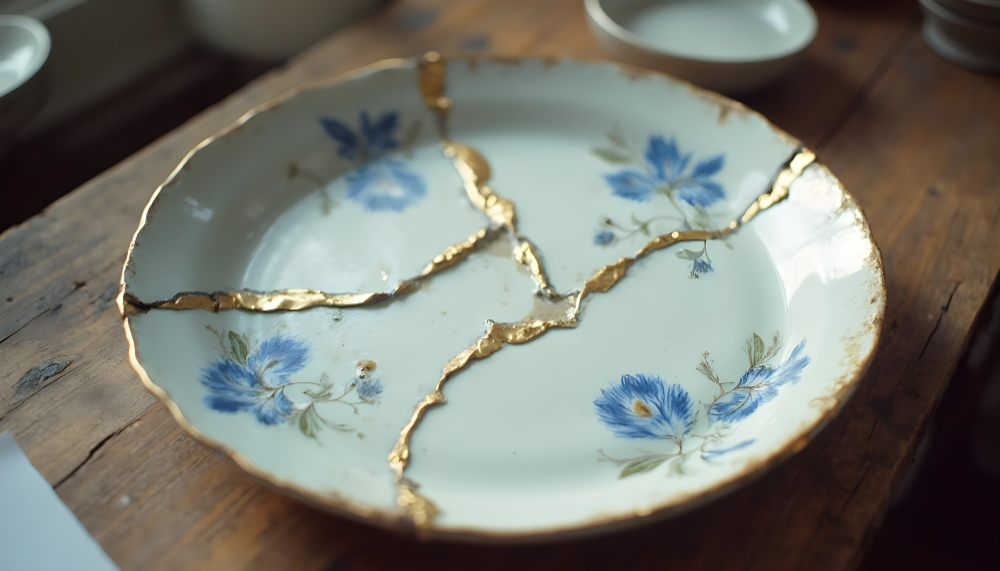
Consider a repaired bowl, too. The repair does not necessarily erase the object's history. The marks of use and repair can become part of its identity.
We can find a related idea in kintsugi, the Japanese craft of repairing broken pottery using lacquer that may be decorated with precious metals.
The broken object is repaired, but its history does not have to be hidden.
I find this an interesting way to think about imperfection. Repairing something and accepting its imperfections do not have to contradict each other.
We can improve something without pretending that its past never happened.
Of course, wabi-sabi is not a rule that every flaw is beautiful or that we should avoid repairing things. It is one perspective that challenges the assumption that beauty must always mean uniformity, newness, or flawlessness.
And perhaps that is worth considering beyond objects, too.
Perfection and Imperfection Need to Be Handled
Living entirely between perfection and imperfection is not easy, especially in a world where we are constantly comparing ourselves with others.
We want to improve our skills, our appearance, our careers, and our lives. There is nothing wrong with that. High standards can help us grow, and correcting mistakes is often necessary.
But there is a difference between improving something because it matters to us and feeling that we must fix everything about ourselves before we can feel satisfied.
We can work on our weaknesses without treating them as proof that we are inadequate.
We can learn from mistakes without allowing those mistakes to define us.
We can appreciate what we have achieved while still having room to grow.
Maybe the goal is not to choose between perfection and imperfection. Maybe it is to understand when to improve something, when to accept it, and when to stop judging it against an impossible standard.
Conclusion
In the modern world, it is honestly difficult to escape the pressure to be perfect. We see idealised images, compare ourselves with others, and create standards that are sometimes impossible to maintain.
But we do not have to let those standards determine how we see ourselves.
The next time you find yourself focusing on a flaw, take a step back. Look at the bigger picture. And when you feel that everything must be perfect, take a closer look at what you are actually asking of yourself.
You may discover that the thing you were trying so hard to fix was never as flawed as you thought.
I will leave you with this:
Don't intentionally be imperfect, and don't put yourself under the pressure of being perfect.